
Why Vector Artwork Usually Has an Advantage
about 2 months ago
Choosing the right artwork before embroidery can make the conversion process much easier. A JPG may contain everything needed to show a logo visually, but its pixel-based structure can make detailed embroidery preparation more difficult.
When you Convert JPG to PES, the quality and structure of the original artwork can have a direct impact on the final stitch file. For projects that need you to convert jpg to pes embroidery file, starting with clean artwork can reduce many preparation problems.
JPG Artwork Has Limitations
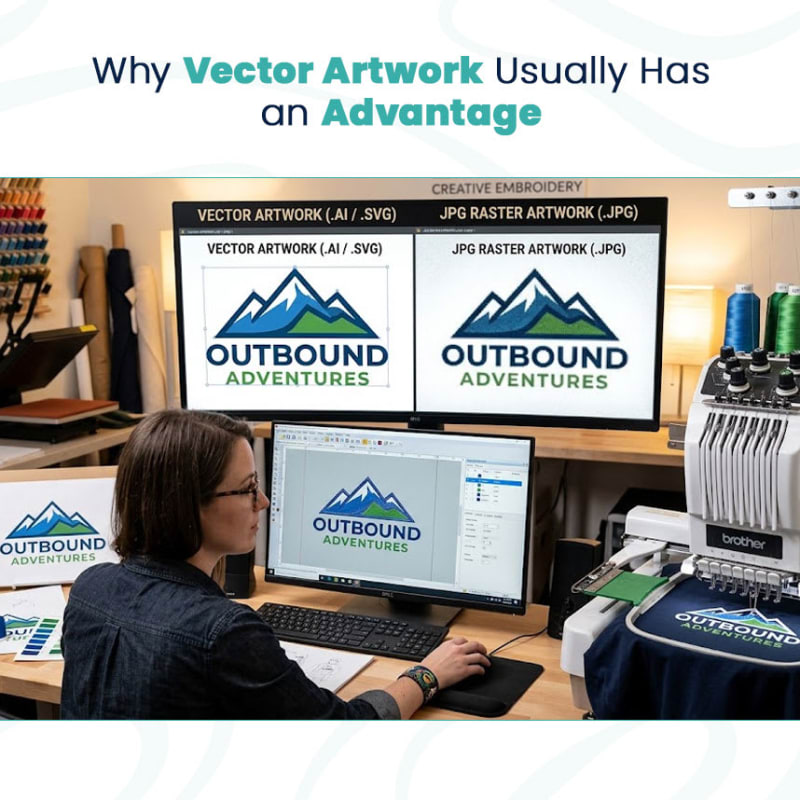
JPG files are made from pixels. When the image is enlarged, edges can become blurry or uneven.
This can create challenges when the artwork contains:
Small lettering
Thin borders
Sharp shapes
Fine details
Curved lines
A converter has to interpret those pixels before turning them into embroidery objects.
Why Vector Artwork Helps
Vector artwork uses paths and shapes rather than individual pixels. This makes it easier to maintain clean edges when artwork is resized.
For embroidery preparation, clear vector shapes can provide better information about:
Object boundaries
Curves
Line thickness
Individual design areas
Color separation
However, a vector file is still not an embroidery file. It must be digitized into stitches before an embroidery machine can use it.
Does Better Artwork Guarantee Better Embroidery?
Not by itself.
Even clean vector artwork needs proper stitch planning. The digitizer still needs to select suitable stitch types, set density, create underlay, plan sequencing, and account for the fabric.
A detailed vector design may also contain elements that are too small to reproduce with thread.
What If You Only Have a JPG?
You do not necessarily need to start over. The JPG can be cleaned and recreated as vector artwork when necessary.
This can be useful when the original logo is blurry, low-resolution, or difficult to edit.
Once the artwork is clean, the next step is creating a practical embroidery file based on its intended size and application.
The best results come from looking beyond file format. The real question is whether the artwork gives the digitizer enough clean information to create stable, readable stitches.
visit https://shineducation.com/blog/jpg-vs-vector-which-converts-better-to-pes
0 Comments
Sign in to join the discussion
Sign In